Posted by: glassblockblogger | December 6, 2013

History of Glass Block’s Progression in the United States

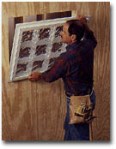
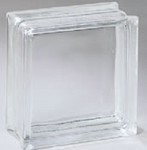
Glass Block has an interesting history that began in the United Kingdom in the late 1800’s.  In 1937, Pittsburgh Corning began to  advance the glass brick product in beauty by developing the technology of FOAMGLAS® that made the first VUE® pattern possible. Pittsburgh Corning continued to develop the product’s application use by creating a glass block product that was hurricane resistant and energy efficient. Pittsburgh Corning did all of this while keeping their manufacturing plants within the United States.VUE by Pittsburgh Corning
Glass Block Beginnings

The Glass Block Technology of the United Kingdom states that in the 1880’s, hexagonal bodies with arched exteriors which could be composed into honeycomb constructions, were mouth-blown for partition and exterior walls. The hollow glass forms which were shaped like neckless bottles were initially worked with mortar. Great care was taken to place the open ends into the mortar in such a manner that the hollow area was hermetically sealed off against the outside air. Condensation could however seldom be prevented completely. These first mouth-blown blocks also suffered from such production deficiencies as differing wall thicknesses and thin corners.

Soon however, more robust machine-made blocks were offered by Luxfer-Prismen-Gesellschaft as well as Siemens in Dresden.

Glass block, also known as glass brick, became an effective architectural element in areas where privacy was desired while still admitting light. Areas that Glass Block was used were in underground parking garages, washrooms, and municipal swimming baths.

Their products consisted mainly of open hollow glass blocks which resembled the usual bricks in size and form. Albert Gerrer in Mulhouse was at the same time still manufacturing mouth-blown glass blocks using Falconnier process which however were sealed before the block cooled down with small glass plugs. Their form still resembled that of the hexagonal prototypes.

Pittsburgh Corning Opens Plant in Pennsylvania
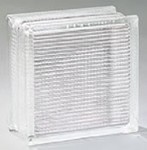
In the 1930’s, further development of machine production produced more satisfactory types which were easier to work. The Corning-Steuben block, consisting of two halves of heat-proof glass pressed together. Modern glass blocks are still being produced according to this principle, namely that two molded-glass halves with a hollow interior are melted and fused together under high temperatures.

In 1937, Pittsburgh Corning was incorporated and built its first plant in Port Allegany, PA, for the production of the Decora® and Argus® Glass Block patterns. In the late 1950’s, Pittsburgh Corning continued its tradition of innovation by creating its first rectangular glass brick. This was followed by many innovative glass block styles, patterns, shapes, and sizes. To further advance the security value of glass block, in 2008, Pittsburgh Corning developed a hurricane resistant glass block window and a blast resistant glass block panel. In 2009, the Energy Efficient Glass Block panels are introduced as the newest LightWise® Architectural System.

For further details on the history of Pittsburgh Corning Glass Block, refer to History of Innovation

Today, the unique ambiance of Glass Block coupled with its functional privacy and security benefits make it incredibly popular in modern residential and commercial settings. Pittsburgh Corning Glass Block produces a versatile material that can be used in a variety of ways. To see the beauty that Glass Block has evolved into, look at the popular Glass Block available today at Eastern Glass Block.

Posted by: glassblockblogger | November 18, 2013

See the Versatility of Glass Block, from Crafts to Modern Home Design

Glass Block Versatility

The versatility of Glass Block makes it a great choice for everything from holiday crafts to modern home design.

Creativity

Glass Block is a versatile material that opens many opportunities for gifts and novelty items. With the holidays coming, glass block can be a fun and rewarding material for gifts and home decorations.

Eastern Glass Block, New York, New Jersey, Boston, PhiladelphiaColor and artificial light can be added to glass block in many ways. In one of our past Posts during the Thanksgiving season, we showed how Glass Block can be used in very creative ways as gifts and decorations. Glass Blocks can also be engraved with unique designs or a personal message to increase the unique value of a memorable gift.

Add Color to your Next DIY Project

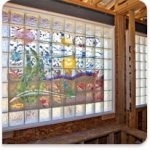
Art Glass BlockThis colorful glass block can be mixed with other glass block patterns to form a wall panel of great beauty with the ambiance of glass art. The color will not fade with time, but will retain its beauty indefinitely.

Art glass block can be used in interior and exterior applications. It is safe for use in wet areas, including pools and shower enclosures. Because art glass block has the design fused on to the glass block, it is as easy to install and maintain as standard glass block. Art glass block adds a new dimension to your designs, without compromising quality or complicating the installation process.

Modern Home Design

With the modern shapes and color alternatives of Glass Block, many have embraced the unique aesthetics of Glass Block in rooms such as Home offices, Home Entertainment Centers, and Living Rooms in open floor plans.

PracticalityLightWise Vinyl Glass Block Window

Then there are those Do It Yourself remodeling projects that you have been planning. When working on the house, you need to think about light, security, energy efficiency, as well as modernizing the look and feel of the room. Glass Block is an excellent material for that purpose.

Whether you are looking to build a unique bar in the game room, a new shower, a kitchen island to enhance your open floor plan, or simply add a design element to your home, Glass Block makes it all possible. With our weekend DIY project modules, we can help you to choose the right materials and provide you with assistance on the design and installation to bring your ideas to life.

Versatility

If you would like to talk more about the options that are available to you with Glass Block, or, if you want to work out an installation or design issue that you have come up against, call us at Eastern Glass Block. We have been designing and installing Glass Block for over 20 years. We love to share our ideas and experience.

Remodeling is on the rise according to the NAHB Eye on Housing. Let’s look at the influences of this trend. It may be surprising how correlated the construction trends really are.

Glass Block Home constructionAccording to the NAHB, the Remodeling Market index (RMI) is showing to be the highest since the first quarter of 2004 at 57. An RMI above 50 indicates that more remodelers reported that market activity is higher (compared to the prior quarter) than those that reported it is lower. This includes major additions and alterations; minor additions and repairs; and maintenance and repair.

In a September post on GlassBlockBlogger called New Construction on the Rise and Home Owners Have Modern Expectations, we spoke of the slow but steady improvement in new single family home construction that started in early 2012. In October, the National Association of Realtors stated that existing-home sales have been “…hitting the highest level in nearly four years…”.

So, who is generating all of this activity? The What’s Trending in Real Estate article says that “Generation X—those ages 33 to 47—made up the largest chunk of home buyers, at 31 percent, between July 2011 and June 2012…”. This generation generally has a growing family with equally growing needs. When a family buys a home, either new or existing, changes are often made to the home by the new home owner.

Housing Economics says that a home purchase triggers a series of additional spending on appliances, furnishings, and remodeling activities that exceed typical spending levels of non-moving owners and persist for two years after moving. Specifically, the NAHB analysis shows that during the first two years after closing on the house a typical buyer of a new single-family detached home tends to spend on average $7,400 more than a similar home owner who does not move, including $4,900 in the first year after purchase. Likewise, a buyer of an existing single-family detached home tends to spend about $4,000 more than a similar non-moving home owner, including $3,600 during the first year.

In addition, remodeling trends also get a boost from the seller of the home. The seller will remodel to make the home more attractive and to increase its value.

So, the trends in home sales have a direct effect on remodeling activity.

However, there is another influence on this trend. There is the rising price of existing homes. The rise in the value of a person’s home increases home equity that owners can tap to finance remodeling projects that they always wanted. The people that stay in their homes are also making improvements using equity that may not have existed several years ago.

The rise in remodeling is directly affected by several related improvements in the overall real estate market.

Whether you are selling, buying, building new or remaining in your current home, consider the security, energy savings and beauty of glass block. Call us at Eastern Glass Block. We have over 20 years of experience in new and existing residential construction. We love to share our experience. PH: 800.635.1226

« Newer Posts - Older Posts »

Categories