Posted by: glassblockblogger | December 30, 2011

Let’s Discuss General Design Considerations for Glass Block

Design Criteria for Glass Block
New York, New Jersey, Boston, Philadelphia

Eastern Glass Block 4 by 4 by 4

4"x 4"x 4" Glass Block from Pittsburgh Corning

If you are considering a Glass Block project, you may be having questions about height, load support, and anchoring guidelines for your project. So, let’s review some information from a leading glass block product manufacturer, Pittsburgh Corning Glass Block.

According to Pittsburgh Corning Glass Block, assuming a normal design wind load of 20 PSF (about 88 mph wind) and based on using our Premiere series (3 and 7/8 inch thick) glass block products, the maximum exterior size panel should not be larger than 144 square feet with limiting dimensions of either 20 feet in height or 25 feet in length – without exceeding the maximum area of 144 square feet per panel. There is a 2.7 safety factor incorporated within this criteria.

For areas of glass block larger than 144 square feet, the use of structural columns and/or shelf angles must be used to sub-divide these areas. For long horizontal expanses, structural columns or mullions (stiffeners) must be used. For vertically high expanses of glass block, the use of horizontal supporting shelf angles must be used to maintain the maximum area recommended and to stay within the dimension limitations stated above.

The maximum area of interior panels should not be greater than 250 square feet with similar limiting dimensions per panel of either 20 feet in height or 25 feet in length.

Glass block must be used as a non-load bearing material. All construction above glass block panels must be independently supported. Individual glass block panels must be isolated within their openings with expansion strip material at head and jamb locations with no loads imposed on the glass black panel. Glass block panels are mortared at the sill. Sills should be coated with a water based asphalt emulsion prior to laying the first course of glass block.

Installed weights of glass block walls are 20 pounds per square foot of wall area for Premiere Series blocks; 25 pounds per square foot for Thickset 60 Series block; 30 pounds per square foot for Thickset 90 Series (thick-faced) block; and 40 pounds per square foot for VISTABRIK® and solid glass block units. All structural members supporting glass block construction must be designed and sized for maximum deflection of L/600.

For exterior applications the building codes allow the use of types N or S mortar utilizing Portland cement, and sand that complies to ASTM(C)-144. The use of accelerators and/or acid washing is not recommended. Nine gauge ladder type reinforcing is to be used in horizontal joints with maximum spacing of 16 inches on center.

Glass block panels are to be framed and anchored at head and jamb locations with either a channel type restraint or with PC panel anchors that give the wall a much cleaner look. Panel anchors are spaced at no more than 16 inches on center up both jambs and across the head.

This information gives you a general idea of design considerations. However, to get more specific and accurate information for your specific project, contact us at Eastern Glass Block. We have over 20 years of experience in commercial and residential design and installation Glass Block projects. We would love to hear about your plans and share our expertise with you.


Posted by: glassblockblogger | December 27, 2011

Adding Security to Your Home as Your Next DIY Project

Securing the Vulnerable Basement Window
New York, New Jersey, Boston, Philadelphia

If you are considering improving the security of your home as your next DIY project, you might consider replacing the basement windows with an alternative that is more resistant to forced-entry. As we have discussed before on this blog, your basement window is the most vulnerable part of the house to flooding. It is also vulnerable to forced-entry by burglars.Basement Window Eastern Glass Block

As the Chicago Tribune Real Estate section on how glass block systems stack up stated;

The catch is that foundation windows are among the easiest entry points for burglars. They are often tucked behind shrubbery and concealed in ground-level shadows around the house where burglars can force the locking hardware and go in and out unobserved.

However, we were talking about a DIY project. So, ease of installation is paramount. The first thing we want in a DIY project is for it to be easy and not create a series of trips to the hardware store.

The LightWise® Window from Pittsburgh Corning is a wise choice when
you want limited installation hassle.

The first question may be “Can I install a series of LightWise® Vinyl windows in an existing frame?” The answer is yes. As the FAQ on Pittsburgh Corning Glass Block states, “you remove the adjacent nailing fins (using a utility knife) of the two LightWise® windows and install the mullion cap design to cover the seam”. Further installation details such as this are available in the LightWise Product Literature available at EasternGlassBlock.com.

The LightWise Architectural Systems give you the opportunity to install glass block panels to your unique specifications. All LightWise Architectural Systems are:

  • Engineered and pre‐fabricated into panelized systems that can be easily and quickly installed
  • Customizable to meet project needs
  • Guaranteed to meet your performance requirements
  • Useful for day-lighting strategies and can contribute to LEED points
  • Available with a range of visibility and privacy options
  • Graffiti‐resistant, damage‐resistant and easy to clean

Contact us at Eastern Glass Block and will assist you with your Contact Us at Eastern Glass Blockdesign. We have over 20 years of experience designing and installing Glass Block in residential and commercial projects. We love the opportunity to share our experience.

Posted by: glassblockblogger | December 19, 2011

Craft Idea for a Unique Christmas Gift Using Glass Block

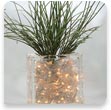
As I entered my friend’s home, the lighted decoration on the table caught my eye. After a quick moment, I realized it was actually a glass block. The way the light glimmered through the glass on this table decoration was fun and festive.DecoBlock Eastern Glass Block

I asked about it how it was made. My friends explained that they drilled into the glass block with a special drill bit to put lights in it. After that, they easily added the finishing touches.

I knew the drilling was the hardest part of the creative process and was actually not necessary. So, I suggested a Post on this blog called Christmas Holidays Stimulate Our Creativity. In this post we talk about a product called DecoBloc that would have saved my friends time and effort.

The DecoBloc

Pittsburgh Corning has a versatile product line for Glass Block arts and crafts called DecoBloc. Since its introduction seventy years ago, Pittsburgh Corning’s genuine glass blocks have been used in innovative ways by artists and crafters to fashion beautiful and decorative creative expressions.

Eastern Glass Block No drill crafts

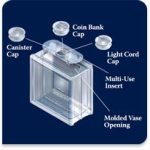
Each DecoBloc is designed with a molded opening that you can use to insert a teddy bear or any decorative item. In addition, DecoBloc contains a special multi-use insert that goes into that molded opening that has three custom cap options. These custom caps allow you to easily transform your glass block treasures into a bank, canister, or decorative light, without drilling or cutting into the block.

You can find great ideas at the Pittsburgh Corning DecoBloc site. DecoBloc comes in two sizes; 8″x8″x3″ and 6″x6″x3″, and two patterns; wavy and ice, creating options limited only by your imagination.

Glass Block is an excellent material for using color and light and can be added to glass block in many ways.

Glass Block can also be engraved with unique designs or a personal message to increase the unique value of a memorable Holiday gift for friends and relatives of all ages.

Call us at Eastern Glass Block. We have over 20 years of experience designing and installing Glass Block and would love to share our experience with you while you plan out that new DIY weekend project or next craft activity.

« Newer Posts - Older Posts »

Categories